MOT classes are the groups the DVSA uses to decide which MOT test a vehicle gets and which checks apply. Most people only need to know their own: ordinary cars, small vans and motor caravans sit in Class 4, motorbikes in Class 1 or 2, and larger passenger vehicles in Class 5. The class is set by vehicle type and weight, not by how old it is.

Part of MOT Status & Expiry. Start with the main guide: MOT Check: Status, Expiry and Test Results
Updated October 2026 · Independent information, not legal advice
Knowing the right test class matters because it decides what the tester inspects and what shows on your MOT certificate. You can see the class, along with every past pass and fail, by entering the registration into the free MOT history checker.
What An MOT Class Actually Is
The test class is a label that matches a vehicle to a set of inspection rules. A tester cannot choose it freely; it follows from the vehicle's type, seats, weight and use.
Why classes exist
A motorbike and a minibus have very different brakes, lights and structures. Classes keep the roadworthiness checks relevant to each kind of vehicle. Without them, a single checklist would either miss faults on heavier vehicles or ask irrelevant questions about a two-wheeler. The system also lets the DVSA approve testers and equipment for particular classes only, so a centre that tests cars may not be approved for buses.
Who sets the classes
The DVSA runs the MOT scheme in Great Britain, and the test classes are part of its testing standards. The final word is always on GOV.UK.
The Main MOT Test Classes At A Glance
The MOT test classes below cover almost every everyday vehicle. Exact limits can change, so confirm weights and seat numbers on GOV.UK.
| Class | Typical vehicles | Notes |
|---|---|---|
| Class 1 | Smaller motorbikes | Usually lower engine sizes; check GOV.UK |
| Class 2 | Larger motorbikes | Usually above the Class 1 engine size |
| Class 4 | Cars and smaller vans | The most common class |
| Class 4A | Cars and small vans with seat belt checks | Applies where extra belt checks are needed |
| Class 5 | Larger passenger vehicles | Depends on seating capacity |
| Class 7 | Heavier goods vehicles | Depends on weight; confirm on GOV.UK |
Quick list of the classes
- Class 1: motorbikes up to a smaller engine size, typically 200cc
- Class 2: motorbikes above that engine size
- Class 3: three-wheeled vehicles up to a stated unladen weight
- Class 4: cars, small vans and many similar vehicles
- Class 4A: Class 4 vehicles that also need a seat belt installation check
- Class 5: larger passenger vehicles, such as minibuses and coaches
- Class 7: goods vehicles in a weight band above Class 4
Class 4 MOT For Cars And Small Vans
If you ask what is class 4 mot, the short answer is the everyday test for most cars. It also covers small goods vehicles, motor caravans and some other vehicles within set weight and seat limits.
What is Class 4 MOT test coverage
The what is class 4 mot test question usually comes down to scope: lights, steering, suspension, brakes, tyres, seat belts, body condition, exhaust and emissions. A tester checks each against the DVSA manual.
Typical Class 4 vehicles
- Standard petrol, diesel, hybrid and electric cars
- Small panel vans within the goods weight limit
- Motor caravans
- Taxis and some private hire vehicles, which may have extra licensing checks
Class 4A And Seat Belt Installation Checks
Some Class 4 vehicles carry more passengers than usual seat rules assume, so a further check applies.
When the extra check appears
Vehicles such as certain minibus-type conversions may need a seat belt installation check. If that applies, the test is usually booked as a different class and the tester will say so.
Class 5 MOT For Larger Passenger Vehicles
A class 5 mot covers passenger vehicles with more seats than a car, including many minibuses and coaches. These are heavier and usually need a test centre equipped for them.
Finding a suitable centre
Many ordinary garages cannot test Class 5 vehicles. Ask before booking, and use MOT near me style searches to find centres that list the class you need.
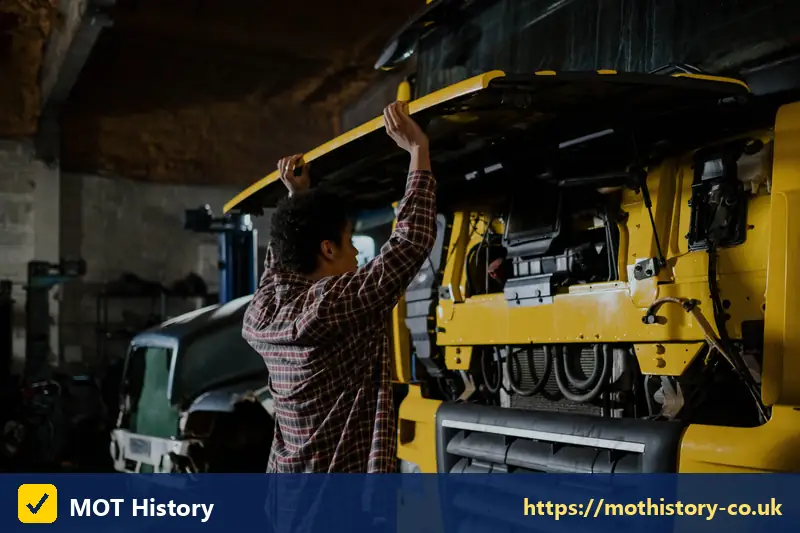
Class 7 Goods Vehicles
Goods vehicles above the Class 4 weight band fall into Class 7, up to a stated upper limit.
Where heavy lorries fit
Heavier lorries and trailers are not tested under these classes but through a separate annual test regime. Read more on the HGV and trailer MOT check.
Motorbike Classes: Class 1 And Class 2
Motorbikes are split mainly by engine size. The test for each is broadly similar, but the class may affect which centre can test the bike and what is checked.
Checking your bike's class
Engine capacity is on the V5C. Full rider advice is in the motorbike MOT guide.
Class 3 And Other Unusual Vehicles
Three-wheelers, quad-style vehicles and converted machines do not always match the obvious class.
Why unusual vehicles cause confusion
A trike registered as a motorbike may be tested differently from a three-wheeler registered as a light vehicle. If unsure, ask the test centre before you book and quote the V5C details.
How To Check Your Own MOT Class
There are three reliable routes. Use the one that fits your situation.
Route one: read your documents
- Look at the V5C for vehicle type, body type and seats
- Check the weight and seating fields
- Compare them with GOV.UK's class list
Route two: look at past certificates
Old certificates and the online record usually show the class used last time. A mot class check this way is quick, but it only proves the class was right then.
Route three: ask the test centre
Give the registration and ask which class they will book. A reputable centre will confirm it.
Using A Reg To Find The Class
Searching for a mot class checker by reg is common, but the class is not always printed as a separate field. The record shows make, model, fuel and test history.
What a lookup can tell you
Enter the registration into the MOT check tool. The vehicle type and past tests give strong clues, even where the class number is not shown.
What Each Class Inspects
The broad checks overlap, but details differ.
Common areas for all classes
- Lights and reflectors
- Steering and suspension
- Brakes
- Tyres and wheels
- Body and structure
- Exhaust and emissions test where applicable
Class-specific extras
Buses, coaches and heavier goods vehicles may have additional checks for doors, stairs, tachographs or load-bearing structure. Motorbikes have checks on chains, sprockets and forks.
Test Results Across Every Class
Every test ends with a pass or fail, whichever class is used.
Defect categories
- Advisory: something to monitor
- Minor defect: a small fault that does not fail the vehicle
- Major defect: a fail; the vehicle must be repaired
- Dangerous defect: a fail, and the vehicle should not be driven
Certificates and paperwork
A pass produces an electronic record, and a paper certificate may be issued. See how to get, check or replace an MOT certificate.
VT20 And VT30 Explained
Older MOT paperwork used codes, and you may still see them quoted in garages and forums.
What the codes mean
- VT20: the pass certificate
- VT30: the fail certificate, often called a refusal notice
How records work now
Results are held electronically by the DVSA, so the paper VT form matters less than the online record.
When The Class Changes
A vehicle can move class, and mistakes happen.
Common reasons
- A conversion adds seats or changes the body type
- A van is converted into a motor caravan
- The vehicle was wrongly recorded at a previous test
If you suspect a wrong class, speak to the test centre, then the DVSA.
MOT Class And MOT Dates
The test class does not normally change when the test is due. The standard rule is an MOT at the third anniversary of first registration, then yearly.
Checking due dates
Use when is my MOT due to see your MOT expiry date. Some heavier classes have a different first-test timing, so confirm it on GOV.UK. You can usually test up to a month before expiry and keep the same renewal date, which is worth remembering if the centre for your class is busy. The certificate length is covered in how long an MOT is valid.
A worked example
Imagine a family buys a nine-seat minibus after owning a hatchback for years. They assume Class 4 because that is what they always booked. The centre explains it needs a larger-class test and a bay to suit. Checking first would have saved a wasted trip and a missed MOT expiry date.
Exemptions And Special Cases
Some vehicles are exempt from the test, or follow other rules.
Historic and older vehicles
Older vehicles that meet the rolling historic rules may not need a test. See MOT age exemption and confirm with the DVLA before relying on it.
Northern Ireland
MOT tests in Northern Ireland are run by the DVA, not the DVSA. Start with MOT in Northern Ireland.
Electric, Hybrid And Classic Vehicles
Fuel type does not create a new class, but it does change some checks. A pure electric car sits in the same class as a petrol car of the same type, and a hybrid is tested as a car with a combustion engine.
Emissions and electrical checks
A petrol or diesel vehicle faces an emissions test on the exhaust. An electric vehicle has none, yet the tester still looks at brakes, tyres, lights and body condition. Classic cars that are not exempt follow the ordinary class for their type, and owners should read the MOT age exemption rules carefully before skipping a test.
Why it matters for records
Because electric and hybrid cars share the ordinary class, their MOT history reads just like any other car's. Look for repeated tyre and suspension advisories, which are common on heavier battery cars.
Mistakes People Make With Classes
Some errors are easy to avoid.
Top slip-ups
- Assuming a small van is always Class 4
- Booking a car test for a minibus
- Forgetting that converted vehicles may change class
- Trusting an old forum post over the official list
What to do if you have booked wrongly
Tell the centre early. A wrong-class booking can mean the test does not go ahead.
Myths About MOT Classes
Several beliefs circulate that simply are not true.
Three common myths
- Engine size decides the class for cars: it does not
- Fuel type changes the class: it does not
- The class decides the price: the centre sets its fees, see MOT cost
Buying A Used Vehicle: Checking Class And History
A buyer can use class and history together.
What to look for
Check that the class matches the vehicle. A mismatch may point to a modified or converted vehicle. Also read the MOT history for repeated advisories and mileage jumps, and use mileage check guidance.
Questions to put to a seller
- Has the vehicle been converted or had seats added or removed?
- Which class was used at the last test?
- Is there a V5C that matches the vehicle type?
- Are there any failed tests in the record that were never followed by a retest?
A seller who is open about these points is usually easier to trust, and the answers should match what the online record shows.
After A Fail: Classes And Retests
A retest follows the same class as the original test.
Retest basics
A retest may be free or partly charged, depending on the time taken and the centre. Read can you drive with a failed MOT to understand the legal position.
Quick Reference: Matching Vehicle To Class
Use this as a prompt, not a guarantee.
Fast answers
- Family car: Class 4
- Small car-derived van: Class 4
- Learner-size motorbike: usually Class 1
- Large motorbike: Class 2
- Minibus or coach: Class 5
- Larger goods vehicle in the lower bracket: Class 7
Frequently Asked Questions
How many MOT classes are there?
There are several, each for a vehicle type, including Class 1 and 2 for motorbikes, Class 3 for some three-wheelers, Class 4 and 4A for cars and similar vehicles, Class 5 for larger passenger vehicles and Class 7 for goods vehicles. The precise limits are set by the DVSA and listed on GOV.UK, so check there for the latest position.
What class is my car for an MOT?
An ordinary car with up to eight passenger seats is normally Class 4. The V5C shows the vehicle type and seats, and past test results usually show the class used. If the vehicle has been converted or modified, ask the test centre to confirm before you book, because the rules depend on seats and weight.
What is class 4 mot?
It is the most common MOT test, used for cars, small vans and many similar vehicles. The tester checks lights, steering, suspension, brakes, tyres, seat belts, body, exhaust and emissions. It applies only within set weight and seat limits, which GOV.UK sets out, so larger vehicles fall into other classes.
Can I find my MOT class from my registration number?
A registration lookup shows make, model, fuel, colour and MOT history, but it may not list the class as a separate field. The vehicle type and past tests still give strong clues. If you need certainty, check the V5C and ask the test centre which class they will book.
Does a class 5 mot differ from a car MOT?
Yes. A class 5 mot is for larger passenger vehicles such as minibuses and coaches and includes checks that a car does not need. It also needs a centre with the right equipment, so ask before booking rather than turning up with the vehicle.
Is a motorbike MOT a different class?
Yes. Motorbikes are usually Class 1 or Class 2, separated by engine size. The checks are tailored to bikes, including chains, forks and handlebars. See the motorbike MOT guide for practical detail, and confirm the engine size on the V5C.
What do VT20 and VT30 mean?
VT20 was the code for a pass certificate and VT30 for a fail or refusal notice. You may still hear them at garages. Today results are held electronically by the DVSA, so the online MOT history is the main record and the paper form matters less.
Can a test centre refuse to test my vehicle?
Yes, in some cases. A centre may refuse if it is not authorised for your class, if the vehicle is unsafe to test, or if it cannot be properly identified. Ask the class they will book and confirm they can test it before you travel.
Does the MOT class affect how long the certificate lasts?
Normally an MOT certificate is valid for 12 months whatever the class, though the first-test timing can differ for some heavier vehicles. Confirm the timing for your vehicle on GOV.UK, and check your record to see the exact expiry date.
Are electric cars tested in the same class as petrol cars?
Generally yes. An electric car is usually Class 4, as with a petrol or diesel car, though it has no exhaust emissions test. The tester still checks brakes, tyres, lights, steering and other safety items, plus electrical safety points where relevant.
What if the class on my record looks wrong?
Ask the test centre first, because a simple data-entry slip is the usual cause. If it is not fixed, the DVSA can look into it. Keep your V5C and any certificates handy, and do not drive a vehicle that has no valid MOT unless it is covered by an exception.
Official Sources
Rules, fees and deadlines change. Confirm anything that affects your money or legal position with the official service.