A vehicle inspection check is a hands-on look at a used car before you pay for it, combined with paper and database checks that show what the car cannot tell you by itself. Done properly, inspecting a vehicle covers the bodywork, engine, tyres, interior, documents and history. It takes about an hour of calm attention and can save you from buying a car with hidden problems.

Part of Used Car History. Start with the main guide: HPI Clear: What a Clear Vehicle History Means
Updated October 2026 · Independent information, not legal advice
No single step is enough on its own. A clean-looking car can have outstanding finance, and a clean vehicle history check cannot tell you whether the clutch is slipping. Use the free lookup for MOT facts, a paid history check for finance and write-off data, and your own eyes and a test drive for everything else.
Why A Car Check Before Purchase Matters
A car check before purchase is the cheapest protection you have. Once money changes hands, most problems become yours.
What can go wrong
Hidden structural damage, a clocked mileage, unpaid finance or a car that is not what the seller claims are all common disappointments.
Who should do it
Every buyer, including when buying from a dealer, a friend or a neighbour. A private sale usually gives you fewer rights than a dealer sale.
The Three Layers Of Checking
Think of inspection in layers: paperwork, database history and physical condition.
- Paperwork: the V5C, MOT certificates and any invoices
- Database history: finance, stolen vehicle markers and write-off records
- Physical condition: body, mechanics, electrics and a road test
| Layer | What it usually shows | What it usually misses |
|---|---|---|
| Free MOT history | Test results, advisories, mileage | Finance, write-offs, theft |
| Paid history report | Finance, write-off and theft markers | Physical condition |
| Physical inspection | Bodywork, engine, tyres, test drive | Hidden record problems |
| Professional inspection | Engineer's independent view | Legal or finance history |
Why order matters
Start with paperwork and the free MOT lookup from home. If those look wrong, you can walk away without spending time or money.
Start With The Free MOT History
Enter the registration into the free MOT history checker before you travel to see the car. It shows past tests, advisories, failures and recorded mileage.
What to look for
- Repeated advisories that never seem to be fixed
- Long gaps between tests
- Mileage that goes backwards or stalls
- A string of failures for the same defect
What it does not show
It does not show finance, insurance, service history, previous keepers or write-off status. Those come from other checks.
Checking The Mileage Story
Compare the recorded mileage at each test with the dashboard reading and the wear on the car. A low figure on a car with a shiny steering wheel and worn pedals deserves questions.
Verify with a separate source
A mileage check helps you see whether readings rise sensibly over time.
Ask about gaps
Ask the seller to explain any year where the reading barely moved, and ask for invoices that show mileage.
Read The V5C Carefully
The V5C (often called the logbook) lists the registered keeper, make, model, colour and chassis number. It is not proof of ownership, but it is essential.
Fields to compare
Check that the colour, engine size and fuel type on the document match the car in front of you. See what a vehicle registration document contains if you are unsure.
Red flags
- A seller who will not show it
- A very recent keeper change on an old car
- A VIN that does not match the plate or the car
- A document with signs of alteration

Matching The VIN And Number Plate
The VIN is stamped on the car, usually visible at the base of the windscreen and on a plate in the engine bay or door frame. It should match the V5C exactly.
Why mismatches matter
A different VIN can point to a cloned, rebuilt or stolen car. If they do not match, stop. What a VIN number is and where to find it is worth knowing before you go.
Do not rely on the plate alone
Plates can be swapped. The chassis number is much harder to change.
Running A Vehicle History Check
A paid vehicle history check, sometimes called an HPI-style check, draws on industry and police data. It typically reports outstanding finance, whether the car is recorded as stolen via the Police National Computer, and write-off records held by the insurance database MIAFTR.
What to expect
Reports also often flag imported vehicle status, plate changes and previous scrapped markers, though coverage varies between providers.
Keep the report with you
Save the car inspection report you receive and compare it to what you see. See also HPI Clear for what a clear result does and does not mean.
Outstanding Finance And Why It Matters
If a car is bought on finance and the loan is unpaid, the lender may still have a claim on it. A buyer can lose the car even after paying the seller.
How to reduce the risk
Use a history check and read check finance on a car for the steps. Never rely on a seller's word alone.
Questions to ask
- Was it bought on hire purchase or PCP?
- Has the finance been settled, and do they have proof?
- Who is the registered keeper?
Write-Off And Scrapped Markers
A car that an insurer has written off may be repaired and sold again. The category tells you how serious the damage was. The rules and categories are explained in car written off.
Scrapped vehicles
A car recorded as scrapped should not be back on the road. Learn how to check if a car has been scrapped.
Ask directly
Ask the seller whether the car has ever been in an accident, then compare the answer with the report.
Walk Around The Bodywork
Inspect in daylight and dry weather. Rain hides paint flaws.
Panels and paint
Look along the sides for ripples, mismatched shades and uneven gaps between panels. Overspray on rubber seals suggests repainting.
Underneath and corners
Check sills, wheel arches and door bottoms for rust or filler. Crouch to look for fresh underseal, which can hide repairs.
- Uneven panel gaps
- Different paint texture between panels
- Bubbling near arches
- Mismatched headlight clarity
Tyres, Wheels And Brakes
Tyres tell a story about alignment and maintenance.
Tread and wear
Uneven wear on one edge can point to tracking or suspension faults. Look for cracks in the sidewalls and check all tyres are a similar brand and condition.
Brake discs
Deep grooves or a heavy lip on the disc edge suggest neglected brakes.
- Legal tread depth on every tyre
- Matching tyres on the same axle
- No bulges or cuts
- Spare wheel or repair kit present
Under The Bonnet
Only check the engine when it is cold. A warm engine can hide starting problems.
Fluids and leaks
Look at the oil level and colour, coolant level and any signs of leaks on the engine or ground underneath. Milky oil is a warning.
Belts and battery
Look for cracked belts, corroded battery terminals and loose hoses. See also check engine check for the dashboard warning light and engine checks.
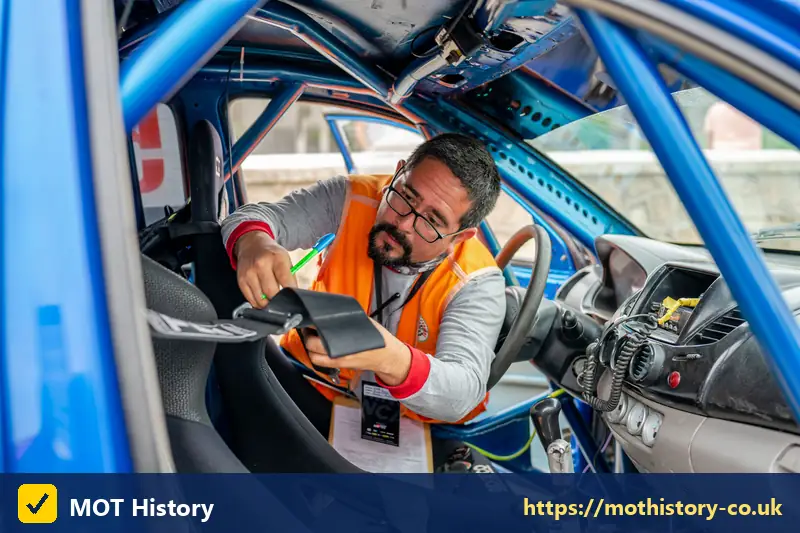
Inside The Car
The interior shows how the car was really used.
Wear versus mileage
Worn seat bolsters, shiny pedal rubbers and sagging headlining do not fit a very low stated mileage.
Electrics
Try every window, mirror, light, the air conditioning, heater and infotainment. Replacing faulty electrics can be costly.
- Warning lights that glow and then go out on start-up
- Damp smells or wet carpets
- Sunroof drains and seals
- Seatbelts retracting properly
The Dashboard Warning Lights
When you turn the ignition on, the warning lights should briefly illuminate and then go out. A light that never comes on may mean the bulb has been removed.
Lights that stay on
An engine, airbag or ABS light that stays on needs explanation. Get it diagnosed before buying.
The Test Drive
Insure yourself properly and ask the seller to confirm their insurance covers you, or use your own cover. Drive at varied speeds.
What to listen and feel for
- Clutch that bites very high or slips
- Gearbox whines or crunches
- Pulling to one side under braking
- Knocks over bumps
- Steering vibration at speed
Start-up checks
Insist on a cold start. Smoke, rough idle or slow cranking can be revealing.
Service History And Receipts
A good service history is a book or digital record with stamps and invoices. See car service history for how to check what exists.
Match the records
Dates and mileage on invoices should fit the MOT history. A gap may be innocent, but ask about it.
Cambelt and major work
For engines with a cambelt, ask for evidence of when it was last changed. The interval is set by the manufacturer.
Special Cases Worth Knowing
Not every car is a standard UK-supplied car.
Imports
An imported vehicle may have incomplete history here. Read the car import check guidance for clues such as a gap between manufacture and first UK registration.
Electric and hybrid cars
Ask about battery health and warranty, charging cable and charging history.
Motorbikes and vans
The same ideas apply, but bikes need chassis and frame checks, and vans may show heavy commercial wear.
Get A Professional Inspection
If you are unsure, a breakdown organisation or independent garage can carry out an inspection for a fee set by them. A written car inspection report gives you something concrete to negotiate with.
When it is worth it
For expensive, complex or unfamiliar cars, or when you cannot judge engines and suspension yourself.
Choose independently
Use an inspector the seller has not recommended, to avoid conflicts of interest.
Negotiating With What You Find
Faults are not always deal-breakers. They are leverage.
Use evidence
Point to specific items such as worn tyres or overdue servicing, and ask for a reduction or for the work to be done before sale.
Be prepared to walk
Plenty of similar cars are available. The best protection is willingness to leave.
Common Mistakes To Avoid
Buyers often skip steps because the seller seems friendly or the car looks tidy.
- Viewing in the dark or the rain
- Paying a deposit before checking documents
- Trusting a screenshot of a history report the seller provides
- Buying a car at a place that is not the seller's home address
- Ignoring a mismatched VIN
Screenshots are not proof
Run your own check using the registration and VIN you see on the car.
Checking The Records After You Buy
After purchase, tax and insure the car before driving, because vehicle tax does not transfer between keepers. Then keep your paperwork together.
Tell the DVLA
Complete the keeper change using the V5C section as instructed, and keep your receipt. Use vehicle tax status to confirm the car's tax status afterwards.
A Quick Reference Checklist
Print or save this list on your phone when you go to view.
- Run the free MOT lookup and review the history.
- Run a history check for finance, theft and write-off markers.
- Match the V5C, VIN and number plate.
- Inspect the body, tyres, engine bay and interior in daylight.
- Test drive from cold and review warning lights.
- Ask for service records and invoices.
- Negotiate only after you have seen everything.
Frequently Asked Questions
What is a vehicle inspection check?
It is a structured check of a used car before you buy, combining paperwork, history databases and a physical and road inspection. The aim is to confirm the car is what the seller says, is legal to sell and has no hidden serious faults. It is worth doing on every used purchase, whether from a dealer or privately.
How long does inspecting a vehicle take?
A thorough look usually takes around an hour, plus a test drive. Online checks such as the MOT history and a paid history report can be done beforehand in minutes. Do not rush, and do not view the car when light is poor, because scratches, dents and paint differences are much harder to see in the dark or rain.
Can I check a car's MOT history for free?
Yes. You can enter a registration into a free MOT lookup and see the test results, advisories, failures and recorded mileage for vehicles in Great Britain. It is a good first step, but it does not show finance, write-off status, previous keepers or service history, so you will still need other checks.
Do I need a paid vehicle history check as well?
It is strongly advisable. A paid check typically looks for outstanding finance, stolen markers and insurance write-off records, which the MOT history cannot show. The fee is usually small compared with the cost of buying a problem car. Compare what different providers cover, and read the detail, not just the headline result.
Is a car inspection report the same as an MOT?
No. An MOT is a legal roadworthiness test of certain safety and environmental items on the day. A car inspection report from an independent inspector is a wider, buyer-focused assessment of condition, which may include mechanical and cosmetic details an MOT does not cover. A car can pass an MOT and still need costly work.
How do I check car inspection history of a particular vehicle?
To check car inspection records in Great Britain, use the official MOT history service or a free lookup by registration. It lists past tests and their outcomes. For other inspection types, such as a breakdown organisation inspection, you would need the document that was issued at the time, which the seller may hold.
What documents should the seller show me?
Ask for the V5C logbook, the current MOT certificate, service records and any receipts for major work. Check that the seller's name and address match the V5C. If the seller cannot show the V5C, be very cautious, and do not rely on promises that it is in the post.
What if the VIN does not match the V5C?
Do not buy. A mismatch can suggest a cloned, rebuilt or stolen vehicle, or a clerical error that still needs sorting out before any sale. If you already own the car, contact the DVLA for guidance on correcting the record rather than trying to fix it yourself.
Can I take a car to be inspected before buying?
Often yes, especially from a dealer. Breakdown organisations and independent garages offer pre-purchase inspections, and sellers who are confident in the car usually agree. You normally pay the inspector yourself. If a seller refuses any independent inspection, consider that a warning sign.
Should I check a car at the seller's home?
Yes, view it at the address on the V5C where possible. A seller who insists on meeting in a car park or on a roadside may not be the registered keeper or may be a trader posing as a private seller. Check the paperwork matches the person and address.
Does a clear history check mean the car is safe?
No. A clear result means nothing adverse was found in the databases checked at that moment. It does not assess the brakes, engine, rust or wear. Combine it with your inspection, the MOT history and a test drive before you decide.
Official Sources
Rules, fees and deadlines change. Confirm anything that affects your money or legal position with the official service.